Bologna Rights Prep for Children and YA Books
Children and YA rights work requires age band clarity, illustration permissions, series logic, school/library signals, and careful partner materials.
By Eleanor Vale · MAQUINE Editorial Desk
A house editorial byline, not a client identity or external endorsement.

Children and YA rights work has its own logic. The rightsholder cannot simply prepare the same materials used for adult fiction or nonfiction. Age band, illustration rights, educational relevance, series structure, parent and teacher expectations, library signals, sensitivity concerns, and format needs all affect how a title travels. Bologna-focused preparation should make those questions visible before the book is presented to an editor, agent, scout, or licensing professional.
Age band clarity is the first requirement. A picture book, middle-grade adventure, YA romance, illustrated nonfiction title, and classroom-friendly series each need different framing. The rights sheet should make age range, word count, format, illustrations, themes, and category clear. If the title has crossover potential, that can be noted, but it should not replace a precise first positioning. Professionals need to know where the book sits.
Illustration and design permissions are critical. Who owns the artwork? Can images be used in translation? Are there limits by language, territory, format, or merchandise? Does the illustrator have approval rights? Can cover and interior design be adapted? Are fonts licensed for new editions? These questions can stop a promising conversation if they appear late. They belong in the rights review before materials go out.
Sample strategy differs by age band. A picture book may need full visual context. A middle-grade novel may need a chapter that proves voice and pacing. YA may need a scene that shows emotional stakes, genre promise, and dialogue. Illustrated nonfiction may need sample spreads and factual apparatus. A translated sample should not be chosen mechanically. It should help the partner understand the reader experience.
School, library, award, review, and community signals can matter. Children and YA titles often move through parents, teachers, librarians, booksellers, festivals, and institutional buyers as well as direct readers. A rights packet should include signals that help a partner imagine the book in its market. This may include classroom use, reviews, series performance, author visits, awards, educator praise, or clear thematic relevance.
Sensitivity and cultural adaptation should be handled with care. Names, school systems, humor, family structures, historical references, social context, and illustrations may carry different implications across markets. The answer is not to erase specificity. It is to identify where editorial judgment is needed so the edition can travel responsibly. A strong localization brief makes these points visible before production.
MAQUINE can prepare children and YA projects through rights review, sample localization, age-band positioning, illustration permission notes, metadata, catalog copy, and follow-up packets. A Bologna conversation is stronger when the title arrives with its publishing questions answered, not merely with enthusiasm attached.
Children and young adult projects require an age and use-case frame. State the intended reader, reading level, word count, format, illustration status, themes, and whether the book is designed for trade, educational, library, or licensing channels. A broad label such as children book is not enough for a partner to understand where the project belongs.
Illustrations create a separate rights and production layer. Confirm ownership, territory, language use, adaptation permission, credit requirements, source-file availability, and whether text is embedded in artwork. Changes in trim size or reading direction can affect composition. The rights sheet should distinguish text rights from art rights so interest does not outrun permission.
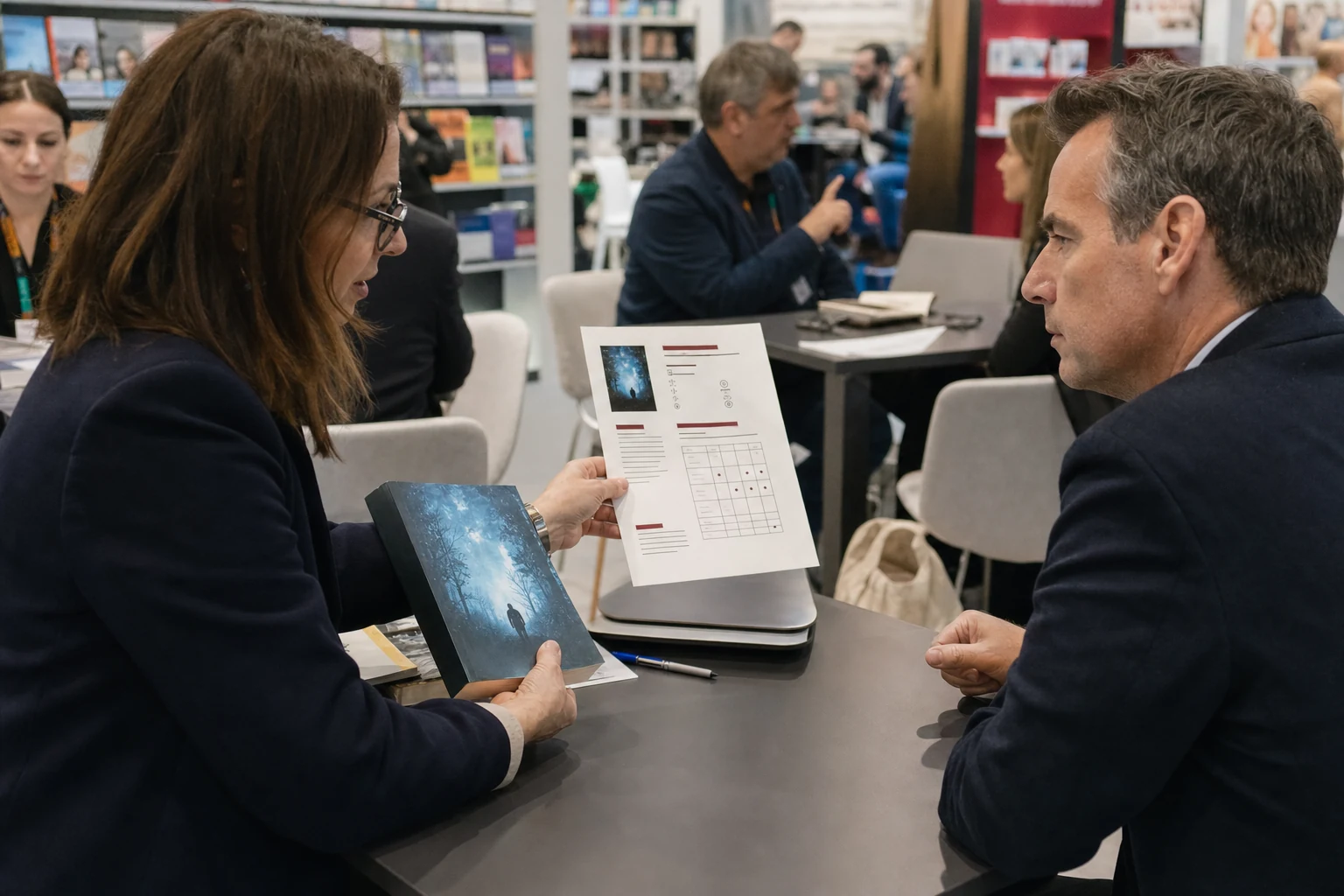
The sample packet should show the reading experience. For a picture book, include a representative sequence or dummy rather than isolated prose. For middle grade or YA, select pages that establish voice, audience, and central stakes. Add a concise synopsis and visual notes. The packet should help the partner imagine the edition while remaining small enough for controlled review.
Licensing conversations may extend beyond translation and print. Character use, merchandise, animation, audio, educational editions, book clubs, and digital products can involve separate rights. Do not present these as available without checking the chain of title. When they are not part of the offer, say so clearly; precision increases confidence in the rights that are available.
Meeting preparation should include comparable titles, publication history, awards or reviews only when verified, sales context that can be substantiated, and the next material available. Record each partner audience and territory before the fair. Children publishing is highly visual, but the strongest presentation combines visual appeal with an unusually clean answer to rights, format, and age-positioning questions.
Add a sensitivity review appropriate to the reader age and destination market. This may cover vocabulary, educational context, safety, representation, local regulation, and information supplied to adults who select the book. The review should not flatten the work. It should identify issues early enough for the rightsholder and partner to make deliberate editorial choices rather than emergency changes near publication.