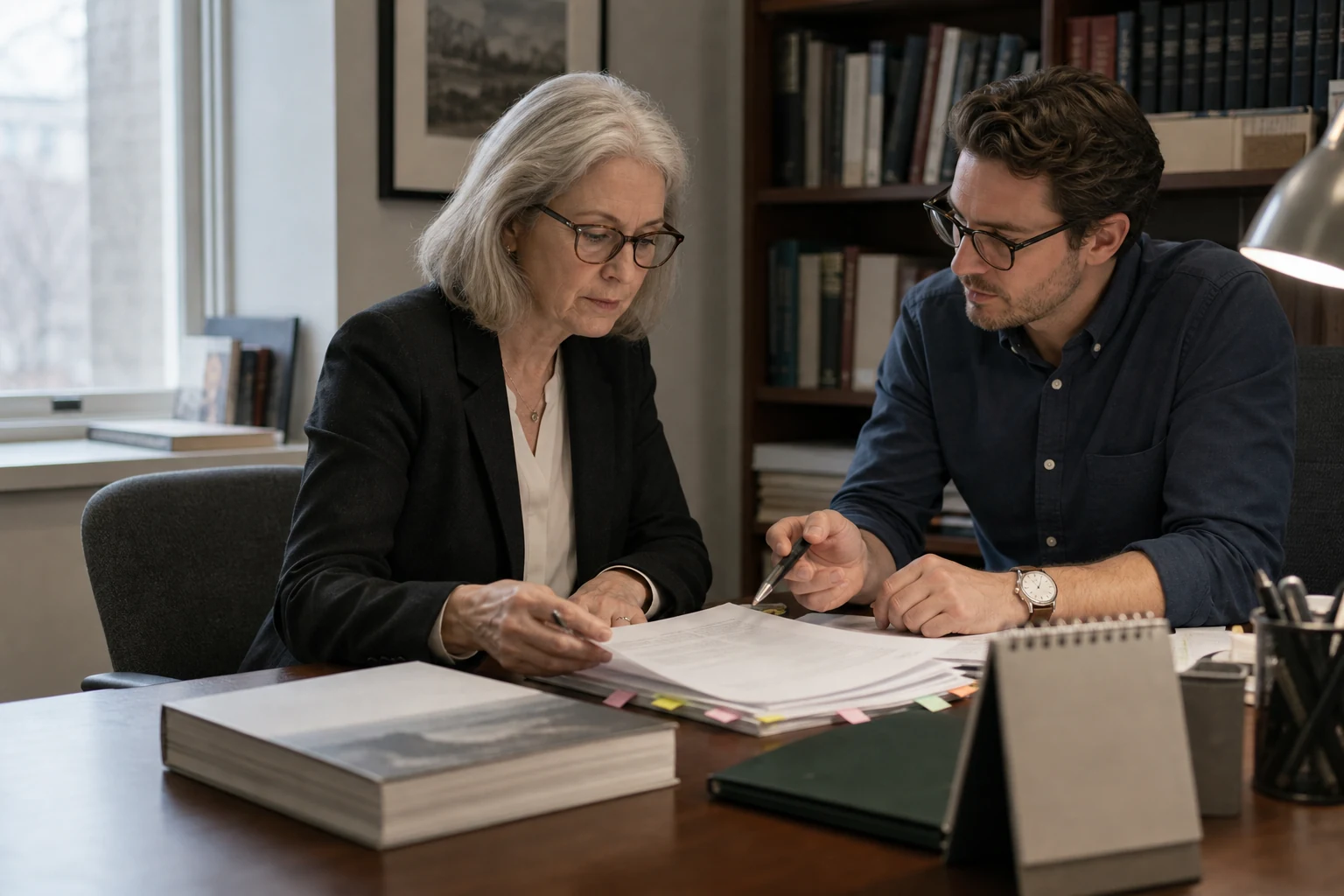
Foreign Edition Scenario: Preparing a Series Without Losing Control
How a rightsholder can prepare a multi-book localization path while keeping platform, pricing, and publication decisions in house.
By Sophie Reed · MAQUINE Editorial Desk
A house editorial byline, not a client identity or external endorsement.

This is a planning scenario, not a client case study or a claim about completed MAQUINE work. It illustrates the decisions and records a rightsholder would need when preparing a series for foreign-edition production.
A series requires more than a first-book translation. The rightsholder needs terminology control, style consistency, recurring character and worldbuilding notes, metadata logic, release sequencing, and a realistic production calendar. If the first localized book is produced without a system, every later book inherits uncertainty. A series can travel well, but only when the rightsholder treats continuity as infrastructure rather than cleanup.
Imagine an author with a successful English-language romance series who wants to test Portuguese and Spanish. The author controls the rights, publishes through their own accounts, and does not want to license the series yet. The first question is not whether the books can be translated. The first question is how to prepare a package that protects voice, tropes, recurring terms, reader promise, metadata, and release options while preserving the author publishing control.
The pilot stage might include a rights status review, series intake, terminology extraction, sample localization, metadata note, and market-readiness brief. MAQUINE would look at category fit, series length, existing reviews, reader promise, source files, cover rights, glossary needs, and distribution plan. The pilot gives the author a grounded decision: invest in a full first-book package, adjust the market strategy, or delay until materials are stronger.
If the first book moves forward, the package should include translation, revision, proofreading guidance, glossary, series style notes, title and subtitle options, store description, keywords, back-cover copy, QA notes, and delivery guidance. The author keeps publication timing, pricing, advertising, platform accounts, and royalty collection unless a separate agreement says otherwise. That control model should be visible in the contract and in the working process.
The second and third books become easier if the first book created reusable infrastructure. The glossary grows. Style decisions become precedent. Metadata patterns become clearer. Reader feedback can inform later copy and positioning. Release cadence can be planned with better production estimates. The author is not starting from zero each time. That is one of the strongest reasons to build the first foreign-language edition carefully.
The author may still choose to pursue a rights deal later. A well-prepared localized sample, rights sheet, market note, and series system can support partner conversations. If a publisher or agent becomes interested, the author can negotiate from a clearer position: here are the rights, here is the material, here is the market test, here is what has already been prepared. Keeping control early does not close the door to deeper partnerships. It improves the quality of choice.
The scenario shows why MAQUINE separates localization partnership from MAQUINE-published edition. A rightsholder can receive serious foreign-edition preparation without automatically transferring publishing control. If the project later needs co-publishing, representation, licensing, or a MAQUINE edition, that becomes a separate written agreement. The series benefits because each step is named instead of assumed.
A series should be planned as a program even when only one volume is approved. Map reading order, recurring characters, invented terms, timeline, cover architecture, comparable metadata, and the status of every source manuscript. The first edition will establish decisions that later books inherit. Treating it as an isolated file transfers inconsistency and cost into every subsequent volume.
The pilot passage should expose series risk. Choose scenes with recurring voices, core terminology, humor, world-building, and any content that changes across volumes. Build a glossary and character sheet during evaluation rather than after the translator has completed the book. This allows reviewers to judge not only whether the sample works now, but whether its choices can survive the series.
Scheduling must account for continuity review. Later source books may clarify an earlier term, and staggered translators may interpret the same voice differently. A series editor or lead linguist should own the shared reference materials and review each volume against them. Parallel production can accelerate release, but only when the decision system is stronger than the increased coordination load.
Cover and metadata should show family resemblance while preserving each book promise. Define stable elements, flexible elements, title hierarchy, series numbering, retailer fields, and back-matter links before the first release. The system should work at thumbnail size and across print and digital formats. A series that looks connected helps readers understand the next action after finishing a volume.
Economics should be modeled beyond book one. Include reuse of glossaries and templates, continuing editorial oversight, correction reserves, release cadence, and the threshold for commissioning another volume. Rights terms should also address the series scope and reversion if the program stops. A successful pilot produces an attractive edition and a realistic basis for deciding whether the program continues.